The short answer for anyone wondering what to wear to a hot spring in the United States: bring a swimsuit, a towel, and a cover-up, and expect that in most soaking areas you will be asked to strip before you get in. Clothing rules are not the same from one spring to the next, and the difference matters.
Three things decide what you actually wear. The posted policy at that specific spring, the water chemistry, and the weather between the pool and your car. Get the first one wrong and you sit through an awkward car ride home. Get the third one wrong and a lovely soak turns into a shivering sprint.
I have made most of these mistakes myself, usually in February, standing barefoot on a wet wooden deck in nothing but a towel while the wind came off the ridge. Ten minutes of planning ahead saves that particular misery. Here is the setup I now run before every visit, updated for 2026.
Table of Contents›
- What You Need
- Step-by-Step: What to Wear to a Hot Spring in the United States
- Step 1: Check Whether the Hot Spring Allows Clothing
- Step 2: Choose a Simple Swimsuit or Bathing Base Layer
- Step 3: Bring a Cover-Up for Transitions and Cold Areas
- Step 4: Use Sandals or Water Shoes Around the Bath
- Step 5: Pack a Towel, Bag, and Change of Clothes
- Step 6: Change Out of Wet Clothing Before Leaving
- Common Mistakes to Avoid
- Frequently Asked Questions
- Do you wear clothes in US hot springs?
- What should I wear to a clothing-optional hot spring in the United States?
- Can I wear a swimsuit in every hot spring?
- What should I bring to a hot spring resort?
- Are sandals or water shoes allowed in hot-spring pools?
- How should I dress for a family-friendly hot spring?
- What to Do First
What You Need
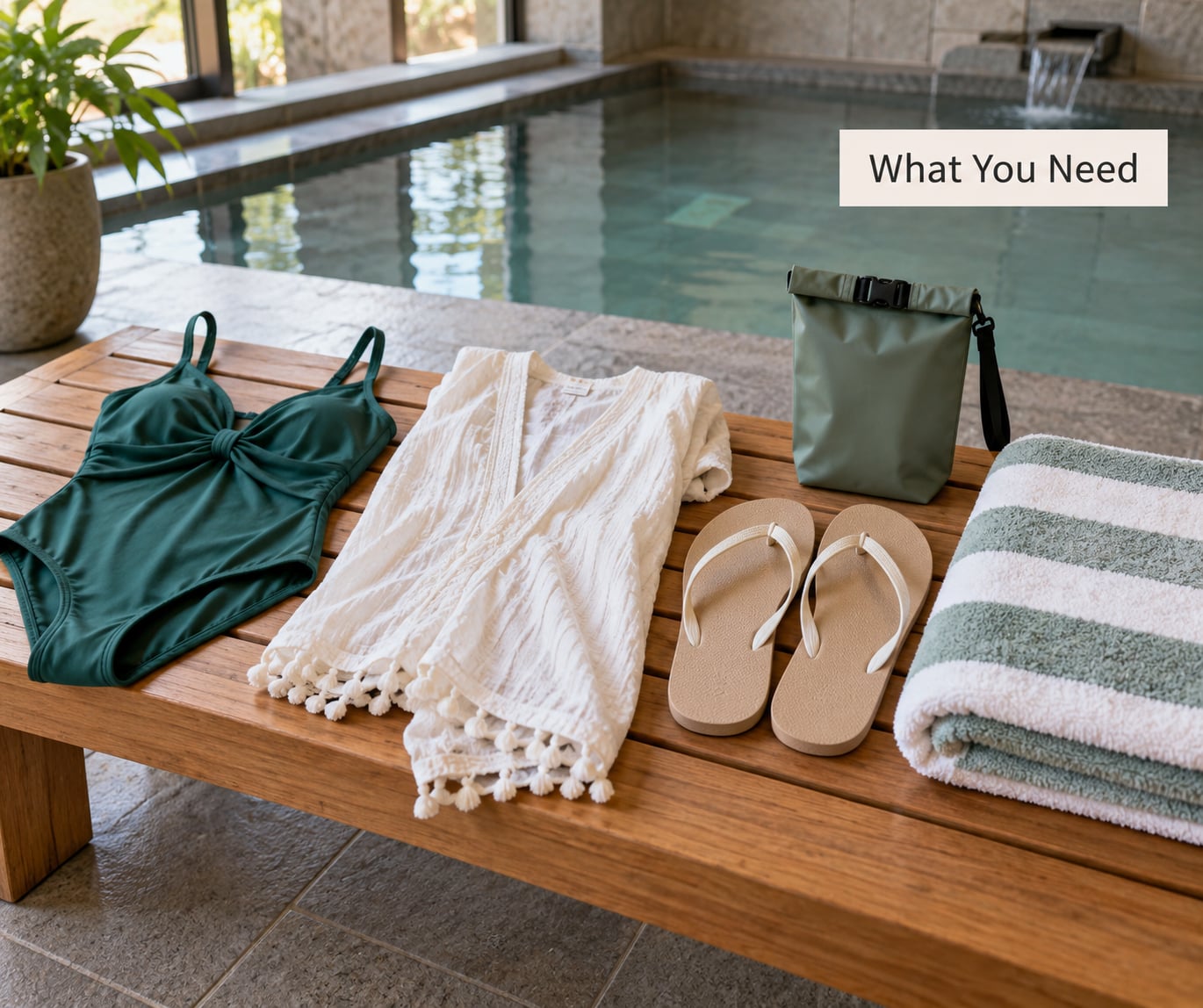
Five items cover almost every US hot spring visit, and only two of them are genuinely non-negotiable.
- A swimsuit. Bring it even to clothing-optional springs. It costs nothing to carry, and it saves you buying one on arrival if the pool side turns out to be suit-required.
- A towel. Some natural springs have no facilities at all, and the walk back to the car is wet stone. Many resorts rent towels, but a microfiber one dries faster and lives in your bag all weekend.
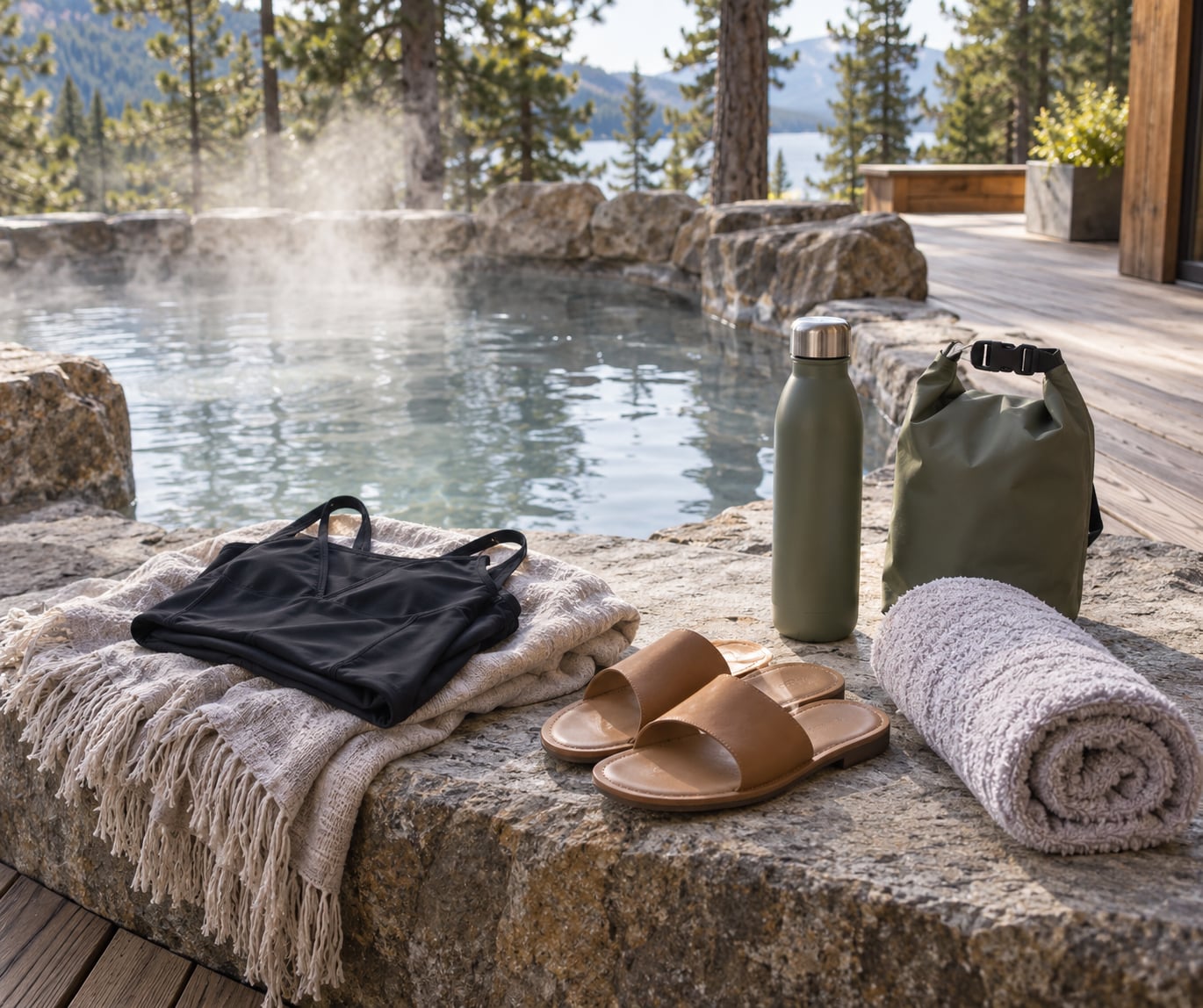
- A cover-up. A wrap, sarong, robe, or oversized shirt for the walk from the locker to the water and back again.
- Footwear. Sandals for decks and changing rooms, water shoes for natural springs with rough bottoms and broken glass.
- A plastic or waterproof bag. Somewhere to put wet clothes, wet towels, and your phone while you soak.
Add a water bottle, a headlamp if you are arriving before sunrise, and a set of dry clothes for the trip home. That last one gets skipped more often than it should.
Now the part that trips people up. Hot spring clothing rules in the United States fall into three groups, and they do not blend neatly together:
Clothing required. Plenty of resort soaking pools, family water parks, and state park pools mandate a bathing suit. Show up without one and you are standing at the desk buying one.
Clothing optional. Nudity is allowed and normal, and a swimsuit is always acceptable. The O Spa in California runs this way, and so does Travertine Hot Springs in the backcountry, where families and solo travelers mix freely and nudity is simply part of the scene.
Swimwear not permitted. A small number of bathhouses follow Japanese onsen practice and require naked soaking with no suit in the water at all. A few onsen-style facilities in the US run this way. If you assumed otherwise, they will tell you at the entrance, but you will be standing there in your suit, which is no fun for anyone.
Carson Hot Springs in Washington is the example worth memorizing, because it does something confusing: the bathhouse soaking area is clothing optional while the pool area beside it requires swimwear. Same building, two different rules, posted on two different signs.
Step-by-Step: What to Wear to a Hot Spring in the United States
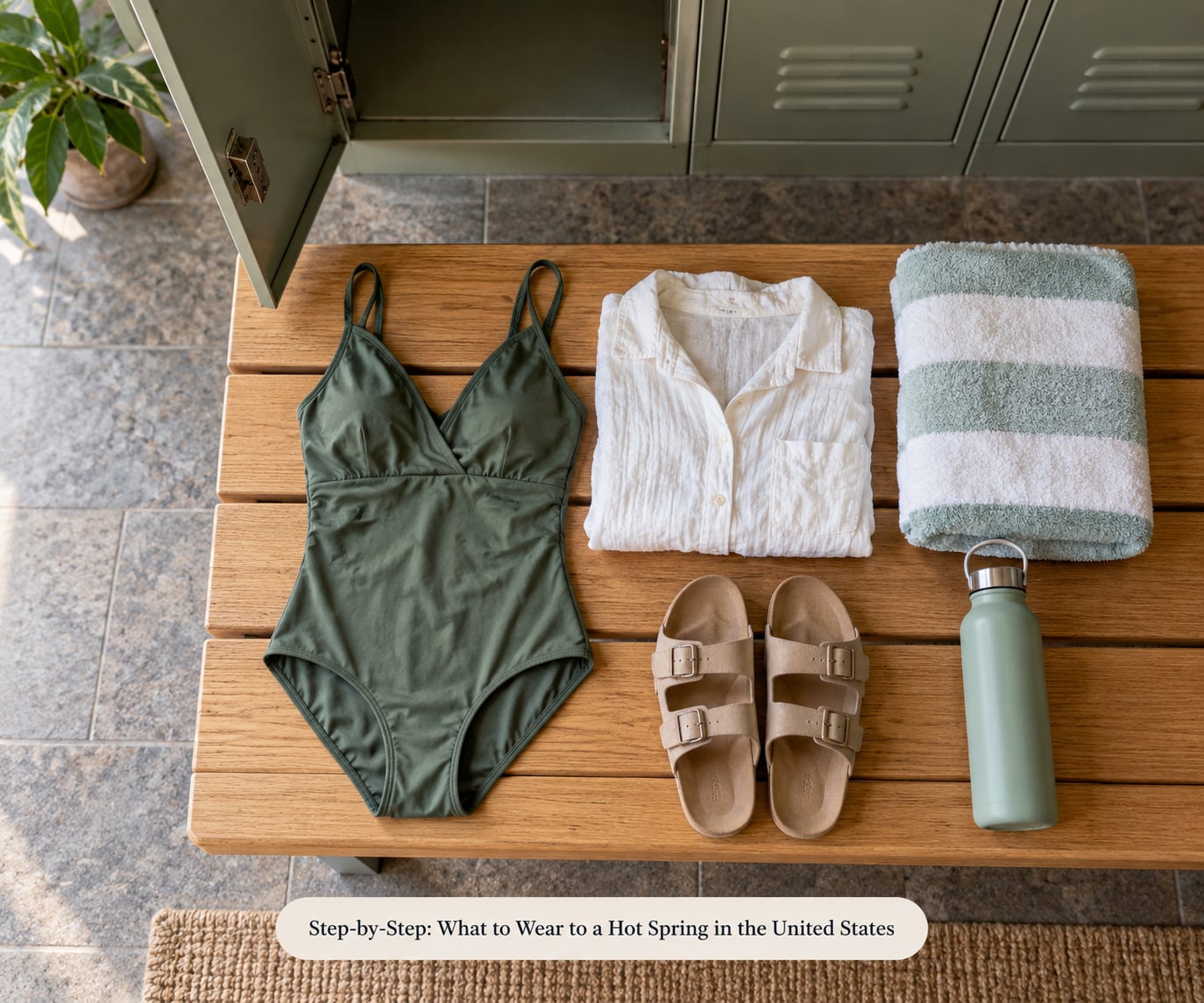
Step 1: Check Whether the Hot Spring Allows Clothing
Do this before you leave home, not at the trailhead. Most natural springs post their policy online, and many naturalist areas have no posted rule at all, which in practice means nudity. Developed resorts and day-use spas publish theirs clearly.
If you cannot find a policy anywhere, assume clothing optional and assume most people will be naked. That assumption is almost always right, and planning for it removes the surprise that makes first visits uncomfortable.
Step 2: Choose a Simple Swimsuit or Bathing Base Layer
Pick a suit you would happily soak in for twenty minutes, because that is roughly how long the water stays comfortable. A dark, matte, quick-drying one-piece works well at any spring that requires clothing.
Mineral-rich water is the reason to be careful here. Sulfur springs yellow and weaken light-colored lycra, and iron-rich springs leave an orange rust mark that can be permanent. Avoid white, cream, and anything shiny. If your favorite suit is pale, save it for a pool day and bring a dark one.
If you plan to soak nude, wear the suit only for the walk in and out. Some first-timers find that awkward; nobody at a clothing-optional spring has ever given it a second thought.
Step 3: Bring a Cover-Up for Transitions and Cold Areas
The cover-up is what makes a clothing-optional visit bearable. A lightweight robe, a wrap, or an oversized button-down shirt covers the walk from the locker to the pool, the cool side of a basin, and the change area afterward.
Even soakers at Strawberry Park in Colorado bring one for the walk back from the water after dark. That is not fussiness. Standing in wet swimwear on a cold path is the single most common complaint people report after a first visit.
Step 4: Use Sandals or Water Shoes Around the Bath
Decks, locker rooms, and tile are wet and slippery, so sandals belong in your hand as you cross them. Most pools ask you to leave footwear at the edge, so anything you wear needs to be easy to step out of.
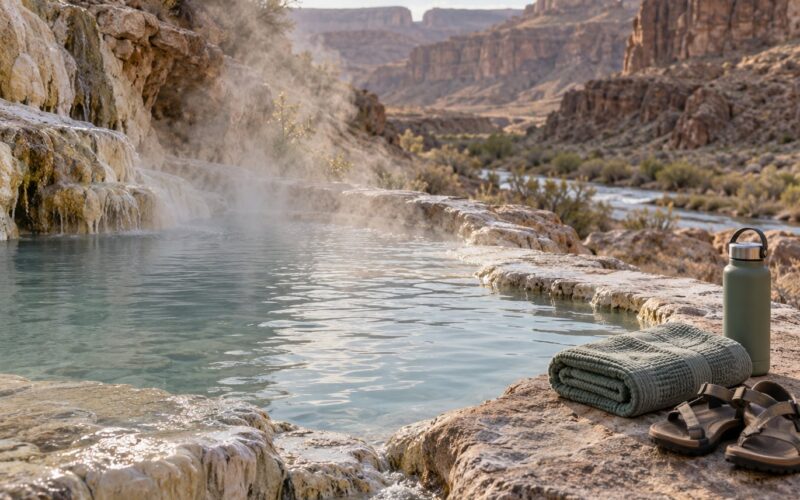
For natural springs, water shoes earn their place. Travertine and other backcountry pools have rough, sometimes sharp bottoms, and visitors regularly report broken glass in shallow, dispersed soaking areas. Crocs-style shoes work if you prefer to keep them on.
Step 5: Pack a Towel, Bag, and Change of Clothes
A quick-dry towel beats a fluffy rental towel because you can get back into the water sooner. Leave it on a dry rock rather than a wet wooden bench; it will dry faster and you will not wade to the exit in a puddle of your own towel.
Use a waterproof pouch for your phone and keys, and a separate dry bag for your outer layers. Mineral water also eats the finish on sunglasses and dulls watch straps faster than pool water does.
Step 6: Change Out of Wet Clothing Before Leaving
Dry off, put on dry layers, and check that you have everything before you leave the deck. Sitting in wet swimwear through the drive home is miserable in cold weather and unkind to your skin in hot weather.
Check the spring before you go. On a pre-dawn visit, pack your gear into a bag rather than scattering it, and count your layers twice, because the walk out is colder than the walk in.
Common Mistakes to Avoid
Wearing street clothes to the bath. Cotton jeans, t-shirts, and hiking boots are not swimwear. They stay wet for hours, they carry dirt into the pool, and in naturalist areas they simply mark you as someone who did not read the rules.
Assuming every US spring is clothing optional. Resort pools and family water parks are strict about suits, and a handful of bathhouses ban swimwear entirely. Check first.
Wearing a favorite light-colored swimsuit. Sulfur yellows it, iron stains it orange, and hot mineral water degrades elastic over time. Bring a dark suit you do not mind sacrificing.
Keeping jewelry on. Rings, watches, necklaces, and earrings should come off before you soak. Metal heats up uncomfortably, can darken from sulfur, and rings are the easiest thing to lose on a dark pool bottom.
Photographing other soakers. At a clothing-optional spring, phones go in the bag. Several facilities post photography bans outright, and a single photo of an unsuspecting person ends your visit and possibly your welcome.
Undressing where families and children can see. Change inside your vehicle or at a designated area. It is the most commonly cited etiquette mistake by regulars, and it is entirely avoidable.
Skipping the cold-weather layers. A hat, warm dry shirt, and socks for after the soak are not optional in the desert in January or the mountains in any month.
Frequently Asked Questions
Do you wear clothes in US hot springs?
It depends on the spring. Most US natural soaking areas are clothing optional, where nudity is normal and a swimsuit is welcome. Resort and state park pools usually require a bathing suit. A small number of onsen-style bathhouses do not allow swimwear at all. Check the posted policy before you go, and pack a suit either way.
What should I wear to a clothing-optional hot spring in the United States?
Bring a swimsuit for the walk in and out, a towel, sandals, and a cover-up such as a wrap or oversized shirt. In the water itself, most people soak nude and towel off. Wear something you can change out of quickly, because you will want dry clothes for the trip home.
Can I wear a swimsuit in every hot spring?
No. A handful of US bathhouses follow onsen practice and prohibit swimwear in the soaking water, so a suit gets you turned away at the entrance. Most other springs welcome a suit without comment, even where nearly everyone is naked. The sign at the entrance is the only reliable answer.
What should I bring to a hot spring resort?
A towel, sandals, a swimsuit if the pool requires one, a cover-up, a water bottle, and a waterproof pouch for your phone. Add dry clothes for the drive home and a plastic bag for wet gear. Many resorts rent towels and suits, but natural springs usually have no facilities at all.
Are sandals or water shoes allowed in hot-spring pools?
Sandals are for the deck, locker room, and paths, and most pools ask you to step out of them at the edge. Water shoes or Crocs-style footwear are common at natural springs with rough bottoms, where broken glass has been reported. Policies differ, so check whether your spring wants footwear kept on or off.
How should I dress for a family-friendly hot spring?
Dress in layers so you can change privately, in your car or at a changing room, rather than outdoors near children. Children still need a bathing suit at many family pools. At clothing-optional springs that welcome families, keep swimwear on for the pool area and follow whatever guidance staff give you on the soaking side.
What to Do First
Look up the clothing policy for the specific spring before you pack the car. That single check settles most of the confusion, and everything else on the list is easy to add afterward.