Planning a trip around a single museum exhibition is mostly about order of operations: confirm the run dates, book the timed entry slot first, then buy flights and a room that put you within a comfortable walk or short ride of the venue. The exhibition is the fixed point. Everything else moves around it. Get that sequence right and the rest of the trip is easy.
Most people get it backwards. They find cheap flights, book a hotel, and then discover the ticket they came for is sold out, or worse, that the exhibition is included in general admission and the whole thing could have been done as an afternoon stop on a longer trip. Solo travellers feel this hardest, because there is no second person to absorb the disappointment and improvise a plan.
Below is the process I use, with realistic time budgets rather than optimistic ones. A big temporary show needs somewhere between 90 minutes and 2.5 hours in the galleries. A blockbuster retrospective with heavy crowds needs the long end of that range plus a return visit. Build the trip around the real number, not the one on the poster.
Table of Contents›
- What You Need
- Step-by-Step: How to Plan a Trip Around a Single Museum Exhibition
- How to Choose the Right Exhibition and Dates
- Reserve Tickets, Rooms, and Transport Early
- Build a Light Itinerary Around the Museum
- Plan for Different Lengths of Stay
- Check the Details Before You Go
- Common Mistakes
- Frequently Asked Questions
- Should I book museum tickets before booking flights?
- How long should I spend at a big museum exhibition?
- Do museum exhibitions sell out?
- What time of day is a museum exhibition least busy?
- Is it worth booking a whole trip for one exhibition?
- What do I do on the days that are not the exhibition day?
- Conclusion
What You Need
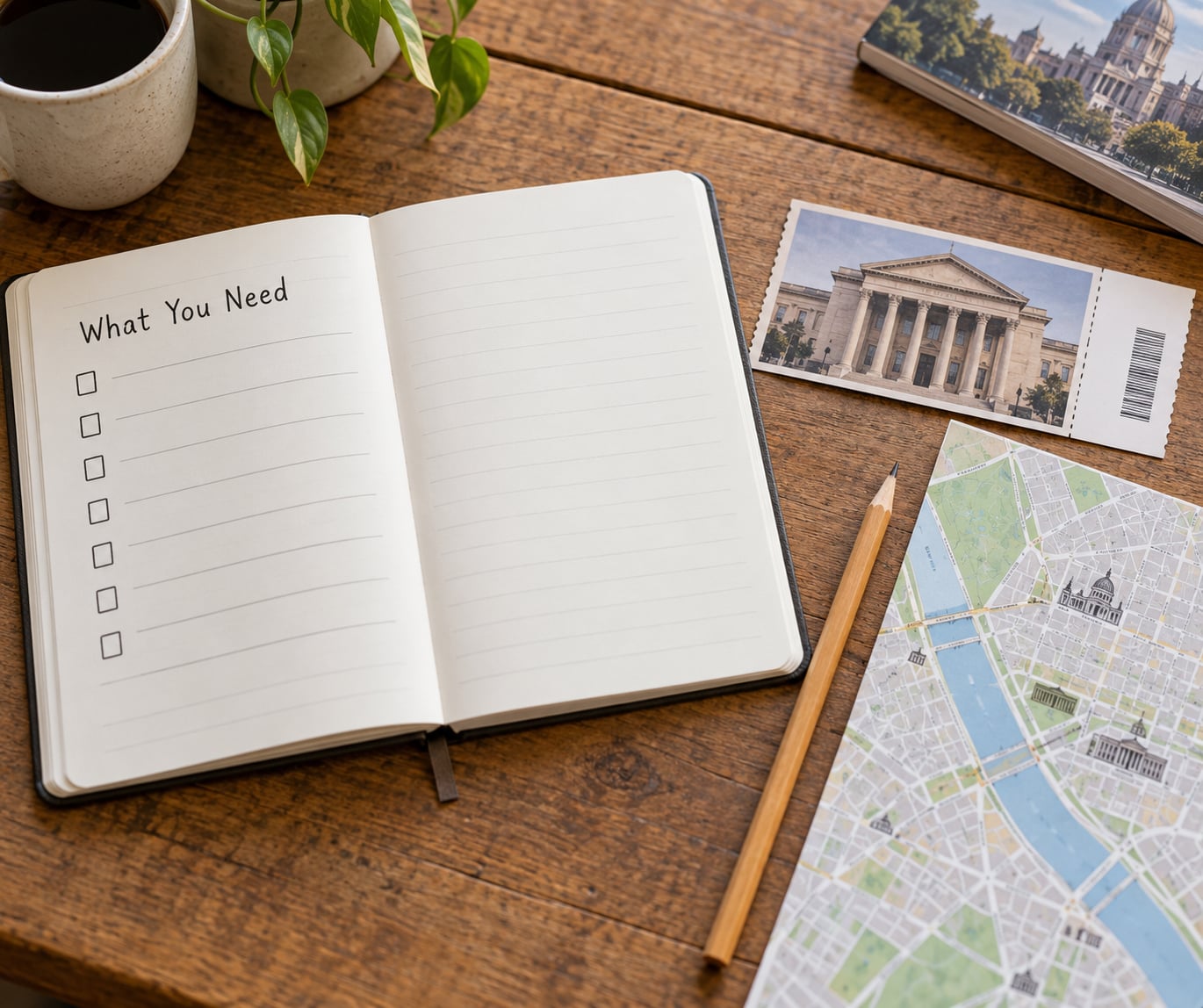
Before you book anything, get these seven things straight. Each one is a fact you can look up in a few minutes, and each one changes a decision later.
- Run dates and closing date. When does the exhibition open, and when does it shut? The final week is often the busiest and sometimes the least well staffed.
- Last entry time. Many large museums stop letting people in 30 to 60 minutes before closing, and galleries may start packing up before the advertised closing time.
- Whether entry is timed. A growing number of major museums now sell timed slots for temporary shows even when general admission is untimed.
- Whether the exhibition needs a separate ticket. This is the one people assume and get wrong most often. Free or standard entry to the museum frequently does not include a temporary exhibition.
- How long you want in the galleries. Decide before you book the room, because it decides how many days you need.
- Base distance from the venue. Map the address to a hotel or guesthouse and look at the actual door-to-gate travel time at the hour you plan to arrive.
- Your fallback. A second exhibition, a second museum, or a day trip within reach, in case the anchor show sells out or something closes.
Two hours reading the exhibition page and the visiting information page will give you all seven. If the museum has a page for accessibility or a visitor FAQ, read that too, since bag rules and photography policies for loaned works are often documented only there.
Step-by-Step: How to Plan a Trip Around a Single Museum Exhibition
How to Choose the Right Exhibition and Dates
Not every exhibition deserves a trip. A good candidate is a retrospective of a major artist, a themed show that draws work from several lenders, or anything you would not be able to see where you live. A weak candidate is a small local show, a display that has already toured widely, or a second museum’s version of the same material you have seen once.
Then look at the calendar. Weekday mornings in the first two weeks are the calmest. The last five days before closing are the busiest and the most fragile, because galleries sometimes start closing rooms while the exhibition is still advertised as open.
Some museums close galleries on a specific weekday for maintenance or loans, and that closure is rarely on the front page. Check the exhibition page for a note about partial closure, and if you cannot find one, email the visitor desk a week before you travel. A short email costs nothing and saves a wasted morning.
Reserve Tickets, Rooms, and Transport Early
Book the timed ticket before you book the flight. This is the whole trick. Museum tickets are date-specific and capped by gallery capacity; flights are not date-locked to anything except your own plans. If you book a flight first and the show then sells out, you are left holding a non-refundable fare for a reason that no longer exists.
The exception is a city you are certain to visit anyway. If the trip was always going to happen and the exhibition is a bonus, buy the cheap fare and take your chances with the ticket.
For the room, aim for something within 20 to 30 minutes of the venue door to door, including the walk from the station or the hotel to the gate. Museums tend to sit on the edge of a dense area rather than in the middle, so a neighbourhood that looks close on a map can mean two bus changes. Check the transit line’s first and last service too, because evening galleries are lovely and the return journey is where the plan falls apart.
Solo travellers get one extra tip here: book a room with a late check-in if you land late, and confirm in writing whether the front desk is staffed overnight. Small guesthouses often are not, and arriving at one at midnight with a locked door is a bad first impression of the city.
Build a Light Itinerary Around the Museum
The exhibition day should be the heaviest day, not the whole trip. Put one pairing stop next to it, ideally within walking distance, and nothing else. A park, a riverside walk or a long lunch works, because it fills the day without stacking another ticketed attraction on top of gallery fatigue.
Fill the other days with two or three things you would enjoy even if the exhibition had not existed. A neighbourhood food walk, a second smaller museum, a market, a bookshop. I write them as a short list with one anchor per day rather than six loose ideas, because a loose list turns into a day spent walking and deciding.
Keep at least one day deliberately unplanned. It absorbs a delayed train, a room you would rather not clean, or a gallery you spent far longer in than expected. The rule I keep coming back to: timed activities early, buffer time after, never two fixed bookings back to back.
Table view of how a three-day trip usually divides up:
| Day | Anchor | Time in galleries | Everything else |
|---|---|---|---|
| Day 1 | Arrival and settle in | None | Neighbourhood walk, one easy dinner nearby |
| Day 2 | The exhibition | 2 to 2.5 hours, first slot of the day | One walkable pairing stop, early night |
| Day 3 | Return, or a second small museum | 60 to 90 minutes maximum | Departure, or a slow morning |
Plan for Different Lengths of Stay
Half a day is enough if the exhibition is well laid out and you have read up on it. Two to three hours is the honest average for a major retrospective, and going back for a second session in the same week is the single best way to see one properly without burning out.
An overnight city break works well when the museum sits close to a station with an evening service. You get the first slot of day two, and you still have an evening in the city.
Three days is the sweet spot for most people: arrival evening, one full exhibition day, one flexible day. Five days is where the single-purpose feeling kicks in unless the city genuinely holds your attention on its own.
Going alone changes the numbers. There is nobody to keep pace with, nobody to hand a bag to, and no one to sit down with when your feet hurt. Solo museum days tend to work better when you plan a place to sit between galleries: a bench in the room with the paintings you care most about, a cafe with a window onto the main gallery, or a quiet corner of the bookshop upstairs.
If you are travelling solo and want company for the day without a group tour, check whether the museum runs a docent-led or curator talk during your slot. Talks are often free with entry, they last 30 or 45 minutes, and they give you a fixed point in the middle of a day that otherwise has no structure.
Check the Details Before You Go
A week out, check five things. Bag size and whether lockers are free or cost a few euros. Photography rules, because loaned works are frequently no-photography while the museum’s permanent collection is not, and the ban is sometimes enforced at the room door. Whether re-entry is allowed on the same day with the same ticket, because if it is, plan two shorter sessions instead of one marathon. Step-free access and seating availability if that matters to you. And the visitor guidance page for any last-minute closure or strike notice.
One practical carry-on rule saves trouble: go with a bag small enough to fit under a seat and skip the cloakroom queue entirely. Large rucksacks are the single most common reason for a slow museum entry.
Common Mistakes
Booking the flight before the ticket. The most expensive mistake, and the easiest to avoid. Ticket first, always, unless the trip was happening regardless.
Treating an exhibition as included with admission. General entry, membership and city passes cover the permanent collection. Temporary exhibitions usually sit in a separate tier above them. Membership can be a better deal than a single premium ticket if it also gets you into other temporary shows during your stay, so check what a membership actually includes before paying full price twice.
Going in the week the show closes. Expect queues, expect restricted photography, and expect some rooms to be partially packed. Mid-run weekday is calmer.
Overloading the exhibition day. A 2.5 hour gallery visit plus a second major museum plus a long walking tour is how a good trip turns into a recovery day. One pairing stop, then stop.
Ignoring door-to-gate travel time. A museum 3 km away across a river with two changes can cost 50 minutes each way. Check the journey at your actual arrival hour, not the direct distance.
Having no backup plan. Decide in advance what you would do if the show is sold out, if a room is closed, or if it rains all day. A second museum, a neighbourhood you have not seen, or a longer train ride to a smaller collection takes ten minutes to research and saves the trip.
Under-researching the artist. An hour with one good book chapter or a museum podcast before you travel changes what you notice in the room. Over-researching is also real, so pick one source and stop.
Frequently Asked Questions
Should I book museum tickets before booking flights?
Book the museum ticket first. Temporary exhibitions are date-specific and capped by gallery capacity, so they are the fixed point in the plan. Flights can be moved or cancelled more easily than a sold-out slot. The only reason to reverse the order is when the trip was happening anyway and the exhibition is a bonus rather than the reason you are going.
How long should I spend at a big museum exhibition?
Budget 90 minutes to 2.5 hours for a major temporary exhibition, and closer to three hours if it is a blockbuster retrospective with heavy crowds. Smaller thematic shows take about an hour. If re-entry on the same ticket is allowed, two shorter sessions beat one long visit, because gallery fatigue dulls attention well before you feel tired.
Do museum exhibitions sell out?
Popular temporary exhibitions, especially retrospectives and anything with a strong press presence, do sell out on weekends and holidays, sometimes weeks ahead. Weekday slots are easier but not guaranteed. If your dates are fixed, book as soon as tickets open, and check whether the museum releases a small number of same-day tickets at the door each morning.
What time of day is a museum exhibition least busy?
The first timed slot after opening is usually calmest, because the galleries fill up as the day progresses and tour groups arrive mid-morning. The last slot before closing can also be quiet but carries the risk of galleries starting to pack up. Midweek beats weekends by a wide margin, and the first and last week of a run are often quieter than the closing days.
Is it worth booking a whole trip for one exhibition?
It is worth it when the show is rare, has not toured widely, or covers an artist you would travel for anyway. It is not worth it for a small local display, for a second venue’s version of work you have already seen, or for an exhibition you could see in another form closer to home. Be honest about which one applies before you spend on a flight.
What do I do on the days that are not the exhibition day?
Fill them with two or three things you would enjoy regardless: a neighbourhood food walk, a smaller museum, a market, a bookshop, or a long lunch somewhere with a view. Keep one day with nothing fixed so a delayed train or an exhausting gallery morning does not wreck the schedule. Pairing a museum day with a nearby park or walk beats adding another ticketed stop.
Conclusion
To plan a trip around a single museum exhibition, treat the show as the fixed point and the rest of the trip as movable. Confirm the run dates, the last entry time and whether the exhibition needs its own ticket. Book the timed slot first, then the flights, then a room within a comfortable journey of the gate. Build one light day around it, leave one day loose, and give yourself two to three hours in the galleries rather than one optimistic hour.
Start with the ticket. Everything after that gets easier.